
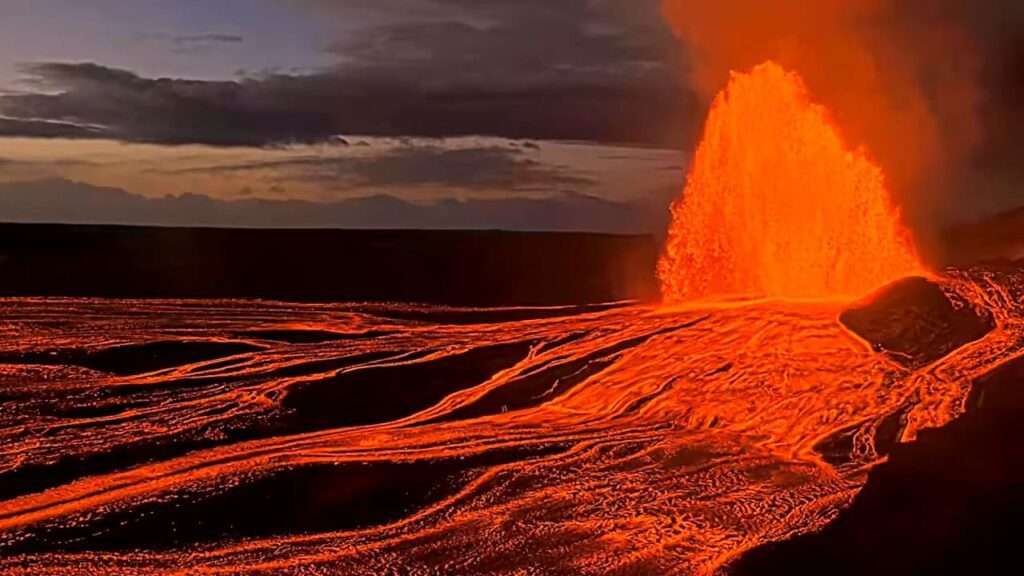
Kilauea is one of the most active volcanoes on Earth, and right now it is erupting. The current eruptive period began in December 2024, and since then Kilauea has produced more than 50 individual episodes of lava fountaining from Halemaumau crater at its summit. In June 2026, it broke the record for the most episodic lava fountaining eruption ever documented on Earth, surpassing even the famous Pu’u ‘O’o eruption of the 1980s.
For visitors, that is remarkable news. This eruption is entirely contained within Hawaii Volcanoes National Park, posing no threat to roads or communities, and it is viewable from overlooks along Crater Rim Drive. The lava glow at night from the caldera rim is something most people describe as one of the most striking things they have ever seen.
This guide covers what the eruption means for a trip to the Big Island, what you can actually see and when, practical information for visiting the park, and what to do if the eruption is in a pause when you arrive.
Current Eruption Status
Kilauea’s eruption is episodic, meaning it cycles between active fountaining phases and pauses that can last anywhere from a few days to a few weeks. During an active episode, lava fountains from the north vent in Halemaumau crater can reach several hundred feet high, and the eruption plume may exceed 20,000 feet. During a pause, the crater still glows at night from residual heat, and volcanic gas (vog) continues to be released. Before your visit, check the USGS Hawaiian Volcano Observatory for the current alert level and daily updates. You can also sign up for free USGS Volcano Notification Service alerts to track eruption activity in real time.
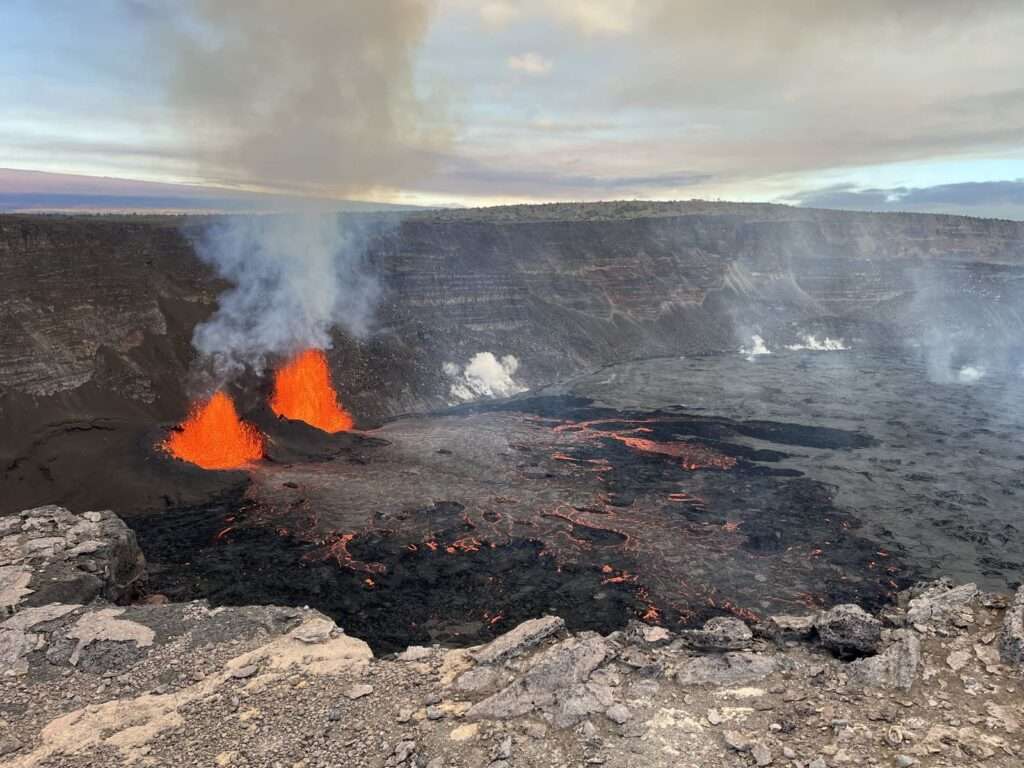
The park remains open during eruptions. The eruption area itself — inside the crater — is off limits. Viewing is from designated overlooks on the rim, which are safe and well-maintained.
What Visitors Can Actually See
During an Active Eruption Episode
When Kilauea is actively fountaining, the experience from the rim overlooks is extraordinary. The orange-red glow is visible in daylight, and at night the light fills the sky above the crater. Lava fountains may be visible depending on wind direction and atmospheric conditions. The scale is hard to convey in photographs — the Halemaumau crater is enormous, and what looks like a distant glow from photos is a visceral, immersive experience in person.
During a Pause Between Episodes
Even when the eruption is paused, the visit is worthwhile. The crater continues to glow at night from hot lava retained in the vent. The caldera itself — the collapsed summit depression surrounding Halemaumau — is one of the most dramatic volcanic landscapes in the world, and Crater Rim Drive passes through lava fields, steam vents, and the edge of the caldera with views that have nothing to do with whether lava is actively flowing.
Best Viewing Spots
The main overlooks along Crater Rim Drive West include Kilauea Overlook, Uekahuna, and Kupinai Pali. The Welcome Center and Kilauea Overlook have the most parking. For night viewing, arrive by sunset and expect company — the overlooks get busy during active phases. Parking can fill by 10 a.m. on popular days.
The park’s own eruption viewing page has the most current information on which overlooks are open and what conditions to expect. Check it the day before your visit.
See the Eruption Up Close
We filmed a visit to the eruption overlooks from Volcano Village — the glow, the scale, and what the experience is actually like at night. Watch the video on our YouTube channel to get a sense of what you’ll see before you go.
Practical Information for Your Visit
Getting There
Hawaii Volcanoes National Park is on Highway 11, about 30 miles southwest of Hilo. From Volcano Village, the park entrance is approximately 20 minutes by car. From Kona, the drive is roughly 2.5 hours. The park is open 24 hours a day, 7 days a week. The entrance fee is $30 per vehicle, valid for seven days. No reservation or special permit is required to enter the park.
What to Bring
- Warm layers — the summit elevation is around 4,000 feet and nights are cold even in summer
- A headlamp or flashlight for night viewing
- Sturdy, closed-toe shoes — the terrain around the overlooks is uneven lava rock
- A rain jacket — the summit area can get rain quickly and without warning
- A dust mask or N95 if you are sensitive to volcanic gas (vog)
- Water — there are limited facilities inside the park away from the visitor center
Volcanic Gas and Air Quality
Kilauea releases sulfur dioxide (SO2) continuously, which can combine with sunlight and moisture to form vog — volcanic smog. Vog is usually manageable at the overlooks when wind conditions are good, but it can shift. People with asthma, respiratory conditions, heart conditions, or pregnant women should check air quality before visiting. The NPS posts air quality information at the visitor center and on their website.
When to Go for the Best Experience
Night visits are the most dramatic when the eruption is active — the crater glow is most visible after dark and the contrast against the night sky is striking. Arrive at least 30 minutes before sunset to get parking and find a good viewing spot. Weekday evenings tend to be less crowded than weekends.
If you are on the island for multiple days, build flexibility into your schedule. With an episodic eruption, the best strategy is to monitor the USGS updates daily and go on the day activity is highest, rather than committing to a single planned visit.
What If the Eruption Is Paused During Your Visit?
Do not write off the park if Kilauea is in a pause. Hawaii Volcanoes National Park is a 335,000-acre landscape with far more to offer than the summit eruption. The Thurston Lava Tube is an easy 20-minute walk through a 500-year-old lava tube system. Chain of Craters Road descends 3,700 feet through 40 miles of lava flows to the coast. The Devastation Trail cuts through the cinder field from the 1959 Kilauea Iki eruption. The Kilauea Iki Overlook gives a view into a crater that last erupted in 1959 and filled with a lake of lava — now cooled and crossable on a popular trail.
The eruption is a highlight, but it is not the only reason the park deserves a full day. For a broader picture of what to do in the area, our guide to things to do in Hilo and the Big Island covers the park alongside Hilo, the Hamakua Coast, and the east side’s other main attractions.
Where to Stay for the Eruption
Most visitors to Hawaii Volcanoes National Park base themselves in Hilo (30 miles north) or on the Kona side (2.5 hours away). Both work, but neither is ideal for the kind of flexible, weather-dependent visit that gets the most from an episodic eruption.
Volcano Village sits directly at the edge of the park on Highway 11 — about 20 minutes from the eruption overlooks. Staying here means you can go to the park for sunset, leave if conditions are poor, return after dark when the glow intensifies, and go again the following morning without a long drive each way. For an eruption that cycles unpredictably, proximity is a real advantage.
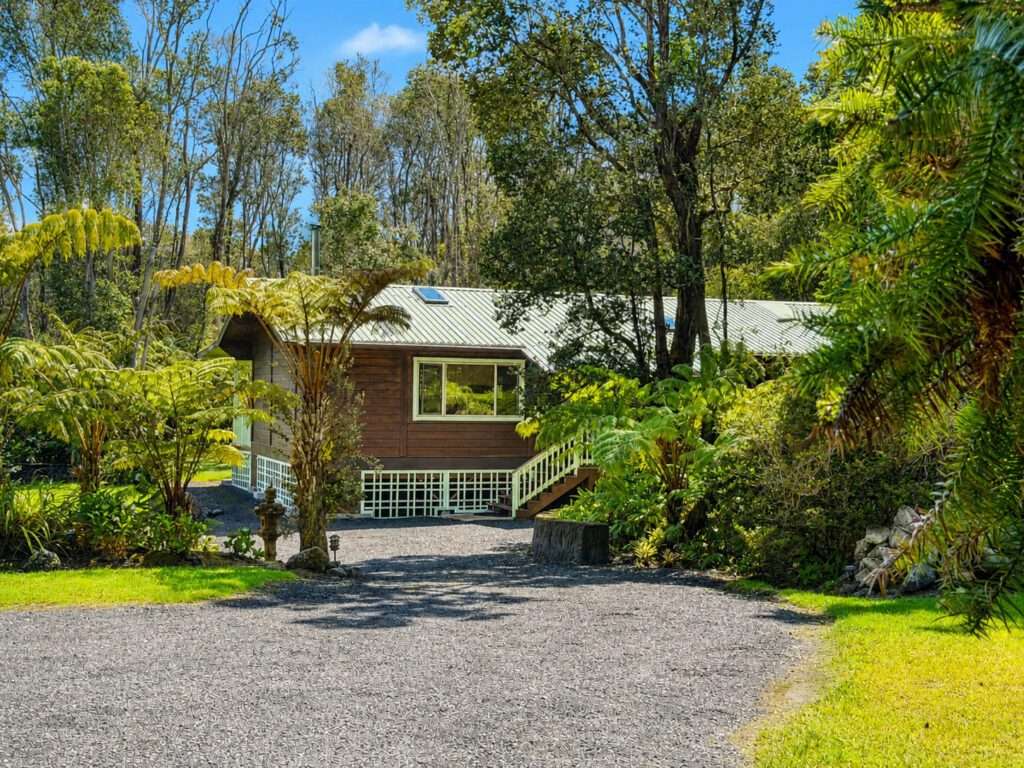
Aloha Hale is a vacation rental property in Volcano Village, surrounded by native rainforest at 3,750 feet elevation. It is one of the closest places to stay to the park’s entrance. If you are planning a trip built around seeing the eruption, volcanohi.com has availability and booking information.
A Final Note on Timing
No one can predict exactly when Kilauea will fountain next. The USGS can sometimes narrow it to a window of one to three weeks between episodes, but the eruptions start without warning and end when they end. The best approach is to build a few days at or near the park into your itinerary, check the USGS updates each morning, and go when conditions look good. The odds of seeing active fountaining over a three-day stay near Volcano Village are high — and even on a quiet day, the landscape itself is worth the trip.